

 Apple Podcasts

 Amazon Music

 PocketCasts

 Podcast Addict

 Overcast

 Audible

 TuneIn
The Lawson Family Massacre

This is K-Town's very first true crime interview, and the gruesome details still gives us chills. A tragic story of mass murder on Christmas Day 1929. This book was the first book written by Trudy J. Smith about the Charlie Lawson murders. It was followed in 2006 by another book on the subject by Trudy J. Smith entitled The Meaning of Our Tears. This first small paper back version has remained sought after for 25 years. On the Anniversary of its first publication, Trudy J. Smith has agreed to allow this special 25th Anniversary Edition to be published due to popular demand. This new edition of the famous book will come to you signed inside by the remaining living author, Trudy J. Smith. And the book and its sleeve with come with a clear protective plastic covering. It is a beautiful, artistically redesigned version of the original cover with special gold foil accents, but also has the addition of a matching sleeve that shows the inscription on the tombstone of the mass family grave: "Not now but in the coming years, It will be in another land, We'll read the meaning of our tears, And sometime we'll understand." An Original Reviews of White Christmas Bloody Christmas from 1990... "From the decade of the 20's, its secret etched in stone, the past has come alive through the efforts of authors M. Bruce Jones and Trudy J. Smith... straightforward... dramatic... realistic... carefully researched... interesting reading..." - The Sanford Herald, Sanford NC
🔮 Unlock The Vault!Become a ⭐️ Mysterian ⭐️ and get instant access to hundreds of ad-free, uncensored episodes — plus exclusive bonus editions..🎧 Start your FREE 7-day trial on Patreon: 👉 patreon.com/mysteriousradio
🌐 Or visit mysteriousradio.com to join now!
0:00 Statements and opinions by guests of Mysterious Radio are not to be considered as endorsed by sponsors or affiliated networks. Any rebroadcast, reproduction, or other use of this podcast without the express written consent of Mysterious Radio is strictly prohibited. [spooky music] Get ready for a night filled with conspiracies, strange places, the paranormal, UFOs, legends, and myths from around the world. With your hosts, K-Town on Mysterious Radio. I'm your host K-Town, and tonight is a true crime edition with my special guest, author Trudy J.
0:43 Smith, joining me to discuss her book called White Christmas, Bloody Christmas, finally the true story of the Lawson family murders of Christmas Day in 1929. If you haven't heard about this, Charles Lawson murdered his entire family, and it is just one of the most gruesome, unbelievable crimes I've ever heard of. And Trudy is here to talk about that with us. We're going to talk about why one family member escaped that. Actually, a family member and someone else were able to walk away from it, and why he committed these crimes. Trudy's books are available on Amazon. She also has a special edition out. It's called The Meaning of Our Tears. Both of these are available on Amazon, but I must warn you, they are hard to find.
1:29 I think I only saw one of those available, actually, and not very many of the other one, The Meaning of Our Tears. So you may have to go to eBay or something, or maybe Barnes & Noble to be able to track down Trudy's books. But she did a great job researching this crime, and now she's going to sit down with us and tell us details of this shocking mass murder that occurred in 1929.
2:16 All right, my special guest tonight is author Trudy Jones Smith, and we're going to be discussing her book, White Bloody Christmas, that details the shocking true story of the Lawson family murders. And this book is available on Amazon.com. Trudy, I want to thank you very much for joining me tonight. Thank you, K-Town. I'm very happy to be here. I want you to go ahead and take a moment to tell our listeners about the new anniversary edition that just came out, and that is available on Amazon as well, correct? That's correct. I think a good thing to do would be explain both of these books. They are about the same tragedy that happened in 1929.
2:59 The first book we researched in the late 80s and put it out in 1990 as just a soft cover, not knowing how much it would sell or how popular it would be. The title of that one was White Christmas, Bloody Christmas, and it was only available in soft cover, and it was only available for about four years. And I just refused to reprint it because I knew later so much more information had come up about it after that first one was done that I would be sometime getting up the gumption, I guess you would say, to rewrite it as a larger book, which I did in 2006.
3:40 And so the second book is titled The Meaning of Our Tears. Since the first one, White Christmas, Bloody Christmas, had been long out of print, no one could get it. It became collectible. I still said I wasn't going to put that book out again. But with its popularity and people trying so hard to find it and then being stolen from the few libraries that had it and that type of thing, when it hit its 25th anniversary in 2015, I said, okay, I'm going to put it out again as a special anniversary edition. This time it would be in hardcover, which I did. And so it's a really beautiful hardcover with a sleeve that goes over it that has the epitaph on the tombstone on the front of it. And that says, that usually piques people's interest.
4:34 The tombstone says on this mass grave says, not now, but in the coming years, it will be in a better land. We'll read the meaning of our tears and someday we'll understand. And so I had always planned for the second larger and more detailed book to be titled The Meaning of Our Tears. So it's sort of prophetic that that epitaph says we'll read the meaning of our tears. And that's the title of the second book. The second book was only put out as a hardcover collectible. And there's a limited number of those. And I've never put either of them out in mass paperback.
5:15 So people who buy the book, they do have something that's going to be, excuse me, it's going to be collectible through the years. And so the main book that gives you the main story, the most correct and the most detailed is the second book. It's about 376 pages. The first book was only about 148 pages. So The Meaning of Our Tears is really the one, if you really want to know all the little details and new information that we found out, it would be reading The Meaning of Our Tears. If you want something highly collectible, that anniversary edition was only done as a thousand copies and I won't produce it again. And we do still have some of them left, but that one will probably be more collectible than any of them. And with that said, I'd be happy to answer any questions you have about the story.
6:08 This had to be a very difficult book to write given the sheer brutality of the murders. Uh, so I wanna know, um, first of all, can you tell us a little bit about yourself and why you decided to take this, m- uh, um, mass murder on? Well, that's a excellent question. I do get asked that question pretty often, and it's pretty interesting how it came about. Um, my father was the one who was so interested in this story, and it, it turns out that there's two little boys involved in this story in 1929. One of them's name was Hassel Miller, and one of them was my father, um, M.
6:53 Bruce Jones, who helped research a lot of this, and definitely was involved in the first book. Um, if you imagine it's a cold, snowy day, Christmas Day, 1929, and you have these two little boys. Hassel Miller was there, and unbeknownst to anyone, he witnessed part of the murders inside the house, and he never told anybody about it. And then you have my father, probably an hour or two later, as the word of this mass murder spread across the countryside there, here in North Carolina. He was standing out in the snow and heard the news from neighbors that this terrible thing had happened. He was forever, um, kind of scarred by it. He just could not understand how a...
7:43 Here he is, a little eight-year-old boy, happy family. They were poor in the Depression-type years there, but he was happy and had a happy family. And then Hassel Miller wi- witnessed this and evidently ran away, never told his parents, never told his wife, never told his children subsequently. Only a few people knew he was in the house. And then finally, when he was, like, 85 years old, someone was talking to him about the murders in a quiet situation with him, and he told them some things about it. Now, we didn't know it for the first book, but we found that out for the second book. And so, but to your question, with my father being so young and impressionable, he never forgot this murder, and this was something that all the people in, or in the surrounding areas felt too. They just couldn't forget it.
8:43 So it almost had a cult following when even though we... nothing really much had been written about it. Um, but he, he was just fascinated by it all his li- rest of his life, and I can remember him talking about it as I grew up, uh, off and on. When I was six, he took us the f- we had gone to our mountains here in North Carolina as a trip. Coming back, he stopped where the, the murder scene was, which it was a cabin full of hay at the time, but he wanted to see it. And so that was probably like 1960s. And I remember being there, but I was so young and, you know, I didn't remember much. I just remember seeing it standing out in the sagebrush, kinda out in the field, and having the hay stacked all in and on the front porch. But, um, when he retired at age 65 in the late '80s, he was...
9:41 Then he could go around and talk and visit people that he knew, and he had some friends up there in that area where the murder happened. And he happened to, um, be talking about it, and by sheer chance, someone took him to meet, um, a gentleman by the name of Hillary Hampton. Everyone called him Hill. But Hill was the murderer's best friend. He was already very elderly, but he and his wife were best friends and really close neighbors to the murderer and his victims. And, um, he got to talk to Hill Hampton at length, and even then, Hill Hampton, he told him a lot of details, quite a few small interesting details about that day and everything. But he also told him that there was a secret, that there was a, something bad that happened in the family, and he said that he was not gonna tell anybody what it was. His exact words was, "I know what, what it was, but out of respect to the family, I'm not gonna tell anybody." And that kind of... At the time, we didn't realize, you know, how important that was going to be. But it does play largely into the story as we began to research it. Well, and to back up still even further, well, after that talk he had with Hill Hampton,
11:12 he came to me and said, "I'd like for you to go up to where the grave is, to the graveyard, and, uh, pay respects to the, to the family and look at the grave." And so we went up there, and that created the opening for White Christmas, Bloody Christmas, which, um, the opening has us standing there. A- and it was raining. We were under umbrellas under a big tree there, looking at the, the, um, big s- tombstone and the huge grave. And I began to read the epitaph, which I recited before. It said, "Sometime in the coming years, we'll read the meaning of our tears." And it kind of struck me that the word read was used. And I said to him, I said, "Has anyone ever written a book about this murder?"
12:05 And he's like, "No, they, they never have." And he says, "I've heard that they will threaten to kill you if you try to-" To write anything about it or try to put a book about it, out about it. Well, I said, "Well, you know, it's now been 60 years," and of course this is late '80s. I said, "It's now been 60 years almost since this happened. Surely a person could write a book about it now, as old as it is." And so we kind of agreed between ourselves, I was working and going to school, back to college at the time, and I said, "If you can do the legwork and record interviews and find photographs, whatever it would take, and talk to people and see what you can find out, I will try to write it for us." And I said, "If it's meant to be, it will come out.
12:55 If it's not meant to be, we won't do it." I said, "But if it's meant to be, we'll end up with a book." And so we put one foot in front of the other and, and he would bring me information, photographs he'd found, uh, different things, and we began to try to piece the story together. And by the fall of 1990, I had put it all together and, and published it, and I did it as, you know, I self-published it. And, uh, so that's really how it started. Given that this happened back in 1929, were, um, murders of entire families, um, rare back in those days or, or what? I would say it's much more rare than you see today.
13:41 Um, you had already had some good size tragedies similar to this. A few. I can't remember the one that's most similar to it that happened probably like in the 1800s. But no, it, it was so shocking, and it, it shocked the nation. You know, of course in '29 it was in all the newspapers across the country there briefly. And n- so no, that question would be it really didn't happen that often, and so it made it even more, uh, I don't know, I guess striking- Right... for people to realize it happened. Also, the fact that he chose to do this on Christmas Day really caused it to be memorable.
14:27 I want you to set the stage for us here and tell us where this family lived, and, uh, if you, if you can give us a little background on the state of the country in that period of time. Sure. This was 1929, and, um, the state of the country was that most of the South was very rural and agrarian. Uh, you had mostly farms, and this, in that particular area it was very heavily, uh, raising perhaps corn and a few crops like that, but mostly tobacco. So this is largely, too, a historical story of tobacco farming and tobacco farmers and tobacco community. You didn't have very many, um, paved roads in the area. Everything was, uh, still so rural back then, and Winston-Salem was the main hub for all these tobacco farmers to sell their tobacco. So that played largely in it. And when you read The Meaning Of Our Tears, I set the stage mainly with the remembrances of, um, the murderer's niece, Stella Lawson Bowles. And so the stage is set in The Meaning Of Our Tears more with the history of the family's, uh, his brother Marion, Stella's family, and then also interjected with what we could find out the, uh, murdered family in there. And, um, a lot of people say, "Oh, well, it was the Depression
16:05 that caused him to do this." Well, I discount that pretty much thoroughly. First of all, even though the stock market crashed in O- October of '29, and this happened in December, Charlie Lawson wasn't a person who had stocks. And the coun- the country had not had time to fall into the horrible depression that would happen in the next couple years. So I don't think the depression of 1929 or the stock market crash of '29 really played a part in it that much. Okay. Well, you know what? Looking at the pictures, it didn't look as if they were, um, real well off.
16:46 Am I correct in, in saying that? They, they were not real well off. Um, excuse me. Charlie Lawson had been a tenant farmer, and he had this opportunity to buy this 100 acre farm where that little cabin that you see that they were murdered in was located. So he had rented and been a, um, you know, a farmer in that tenant farmer situation. And so he had gotten this deal to buy this farm, and what was on it was that little 200-year-old, we'll call it a cabin. It was really kind of like slat boards or whatever with canching in it like a cabin. But it was small and, and what he had promised his wife Fanny was that he would, uh, build her a new home, uh, there on the property, you know, if they got better off. But he was doing pretty well there in that first... I think they bought it in '27, and that first couple years they began to do well in the tobacco.
17:52 And so he was coming along and, and beginning to do well, although he had not started building her a house. Um, it's been told that the wood stove, she had like a new style wood stove that he bought for later to go in her new house. But they weren't really poor. The, the whole tobacco farming... culture, I guess, wasn't well-to-do, if you will. If that answers that question. Okay, it does. Now, uh, let's go back to what you said. You said that that cabin was 200 years old at that time. Yeah, that's what they had said. It was around 200 years old then. Oh my gosh. So it was really old. Wow.
18:36 Wow, okay. Now, my father got to go back in that cabin later in about 1979. I wasn't with him, so I never got to see the actual cabin as an adult or anything. But he went back and it was still, I guess, solid enough to go through it. And he said that it was this little narrow stairwell that went up the side, you know, to go up to the upper loft bedroom area. It was like a big open area up there where when they were murdered, there was two full beds up there. [clears throat] Excuse me. And, um, but anyhow, he said that the steps going up to that upper level of the cabin were s- just worn, just, like, had circles in them from all the footsteps over the years that had gone up and down those steps.
19:28 And I think that indicates it was really, really old. Okay, very good. Now- So I think it may have, it may have been 200 years old. All right. So, um, okay, so take us through a little bit of their family life. Um, did you, did you find any, any, uh, instances where they were always having issues or, or, or was this a family that was known in the community for getting along with each other and, and, and having the impression of being a loving family? Um, another good question. So yeah, he had a very good reputation in the community as being an honest person. Um, all these many, many interviews with these older people, most of them are passed away now, but all through it were, were sprinkled accounts of him, interactions with him, what may have happened, you know.
20:26 Like, there's a story where he owed a, a man $2, and this man's daughter, who's now elderly, was telling us a story that, um, he owed her father $2, and he got on his mule and rode for miles to make sure he paid that $2 back. And you know, so there's different things all through the book that happened like that, that kind of paint a picture of him, but he was also a very much of a taskmaster and very stern with his children. Um, but still known to be, you know, a good father and husband. And, uh, but I think it was a different day back then, you know. Things were different.
21:10 And so I think probably he w- he was a lot like a lot of the, the family men back then. It was a hard life. Uh, raising tobacco is very, very hard. And, um, the children were pressed into to, um, working in the tobacco fields very early. Uh, Stella Lawson Bowes to- told a story of her handling two big mules and drag- a- and they were dragging, um, tobacco sleds back and forth. Um, and she had to, to handle these big mules, and she said they were nervous, and she was very scared of them, and she's only seven years old, you know, taking these tobacco sleds full of tobacco back and forth from the fields to where they were going to, uh, cure it. Hmm. And, um, so I mean, it was really hard, and that, that history of that type of life, I tried to weave that in there also. And my father, who was, you know, of that same era, he worked at tobacco, so he was able to give a lot of information about what it was like, you know, living that kind of life and working in tobacco too. Charles wasn't known to have any type of issues like drinking or anything like that? As far as I know, no one said anything about, uh, Charlie Lawson being, drinking a lot. There, there are some instances with, there's a Dr. Hilzebek that
22:44 sh- k- shows up in the story throughout in many different ways, and he was the one that oversaw doing the death certificates and the so-called autopsies, which he really only signed, like, two or three months later, and it's told that he was drunk, uh, the night of the murders when all the bodies came in for him to, to assess their wounds and record things. And, um, but as far as Charlie Lawson, uh, drinking never came up as something that, um, people s- said about him. All right, my special guest tonight is Trudy J. Smith, and we are discussing her book, The Meaning of Our Tears. It is the true story of the Lawson family murders, and I will have more for you when we return right after this.
23:31 [gentle music] All right, we are back. And now, uh, Trudy, I wanna ask you this. If you don't mind, um, to take us through the days leading up to the murder.
24:18 Specifically, I wanna know if you found out anything in your research Whether or not anything strange was happening in the family or, or whether there was, um, a noted moment of violence or agitation in the family. Okay, I'd be happy to do that. Yeah, there was a lot of things that were noted by people and spoken of by people, [clears throat] especially say, two weeks, one month to two weeks or so before the murders. One thing was that, um, the wife, Fannie Lawson, had begun to tell some of her sisters-in-law, who she's very close to, things were not right in the family. Um, there was a secret.
25:08 But it, it's really hard to paint that picture early for you because so many people wouldn't talk about it. There was actually a pact made by family members that they would never speak of it, and no one under 21 knew what was, what was wrong. But when you get out there with all the theories that people had, even before we started writing the book, he was attacked by a Black man in, in d- a tobacco warehouse. We thought it was a couple years before the murders, but it was actually 10 years before. People have tried to say that that Black man came back and murdered the family, which I discount that pretty much.
25:53 Then you have the situation where, um, he, when he first bought the property, the pack house had to be dug out. You know, they would dig out of the floor, you know, to get down into the dirt because it would make the moisture right for the tobacco when it was hanging and being stored in there. And he hooked a mattocks, the end of a mattocks on a rogue wire from an old fence and it re... When he hit it and it recoiled, he hit himself in the head with the, with the mattocks, and it made a really nasty looking injury because his entire face was bruised and full of, you know, it was black with blood and [clears throat] inside the skin. You know, so he was, he looked horrible. But it really was not a life-threatening injury. It just looked really bad. But then people theorized that that injury injured his brain.
26:47 But later the doctor said, no, they didn't see any kind of injury from that that would have caused him to go crazy. And keep in mind too, this is a couple years before the murders. So you had that. And, um, now specifically to your question, people began to hear arguments. Um, you know, it's rural. There's fields. Uh, the house that they were murdered in sits up on a hill, um, really steep hill, and then as you go down the steep driveway and then there's a meadow where they raised tobacco or hay la- in later years. Then Hassell Miller's house was just right there, right across that stream and the field, and they could hear arguments, but it was far enough away they couldn't understand what was being said.
27:38 They could just tell that it was angry voices. You know, lots of arguments off and on in those last weeks. And, um, but nobody ever said that they heard exactly what was said. Uh, so let's, let's talk about his, his son. As a matter of fact, let's do this. If you don't mind- Yeah... I should have asked you this early on. Tell us how many children he had and their ages, if you don't mind. Okay. Um, so you had Charlie, who was 43. He's the murderer. You had Fannie, who was 37. She was the mother. And then you had, um, Marie Lawson, who was the, um, um, 17-year-old daughter. She was the oldest. Right after her, you had, um, um, Arthur Lawson. Now, Arthur was not killed.
28:39 Um, there was always a big mystery about that too, as to why one son was not killed that day. And then after him, you had Carrie Lawson, who was 12 years old. And then you had Maybell Lawson, who was seven years old. And then you had James Lawson, who was four years old. And then you had Raymond Lawson, who was two years old. Um, he was actually very close to being three. And then you had the, the little infant, Mary Lou, and she was just under four months old. She was right at four months old. And so there was six total children and that were killed.
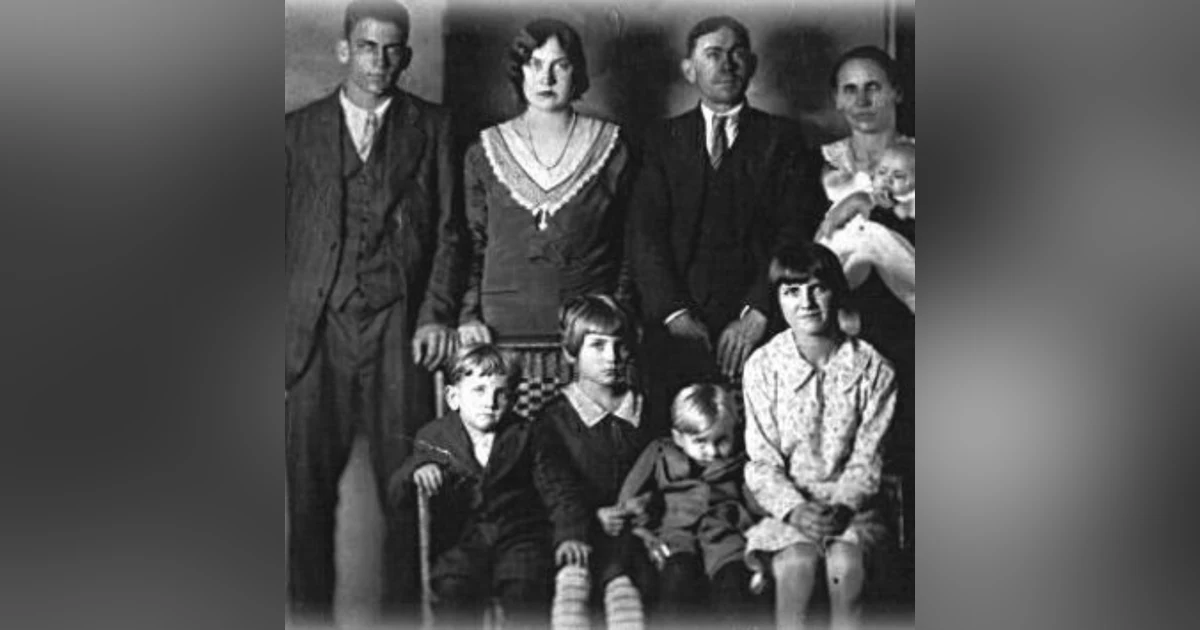
29:30 Um, Arthur also later, he was nicknamed Buck. People, many people knew him as Buck. [clears throat] Um, and then you had the two... So there was nine people total, but only one of them survived. All right. So, so, so take us through that day. Well, before we go to that actual day, it might be good to, um, talk about around two weeks before it happened 'cause it kind of sets the stage. Um, right around two weeks before, I, my father and I believed that, um, he had this, he was already planning this. Um, he took the family to Winston-Salem on an excursion. While there, he bought them all brand-new clothes, uh, nice Sunday-type clothes. Bought himself a suit and tie, Arthur a suit and tie. Um, the little boys were dressed up and the little girls got, uh, new dresses. Uh, Marie was...
30:36 It was a beautiful, um, uh, navy blue, um, velvet dress with a white collar, and then Fannie also had a black dress with a white collar. And then after he got them all outfitted, he took them to a Winston-Salem professional photography studio and had their portrait made, all of them. And actually, in all the years I've messed with this, I could not find any other photographs of the family. I never located like a yearbook or anything where I could actually pull out some pictures of these folks. So if Charlie had not done that two weeks before the murders, we really wouldn't have an image of them. But because he did that, we have this great image, uh, family portrait of them.
31:22 And so I think that's telling right there that he already knew what he was going to do. Also, he was telling people in that week or two before, um, that he was gonna have a Christmas surprise for his family. He did not... His family did not purchase any gifts or anything. Uh, he told the family there was gonna be a surprise on Christmas, and that type of thing went on. And then when you start realizing what was going on, he had some other things happening. He was having headaches for some reason. Um, don't know exactly now why, but he went to several doctors and, you know, complaining of headaches. He also had some kind of a rash on him, which may have been something like, it could have been shingles.
32:14 Um, it was like on his chest, and that was bothering him. Um, his wife, Fannie, told people that she... That he would get up and pray in the middle of the night. Uh, he was very depressed. He would pray and cry. She told her, um, uh, sisters-in-law on one occasion that she woke up in the middle of the night and he wasn't in the bed, and she got up and went looking for him, and it was right before the murders, like in late November, and he was outside in a freshly harvested cornfield, down on his knees, crying and praying. And once she got out there to him and asked him what he was doing, and he turned around and told her to go back in the house, and he had his shotgun with him, and that had frightened her. There was another instance she said that he started... He asked her was, had he been a good husband to her, and that type of thing. And he, he said there was something he wanted to tell her.
33:28 And then before he told her that night, um, he, he stopped and he never told her. But we have a theory that she already knew what was going on that was bothering him so much, you know, as far as Norwally or why he was crying and praying. So I hope that kind of answered it. Um, there was a lot going on for him, I think. Depression, uh, knowing that everything was gonna come out, I think, you know, about the scandal in the family. Okay. So I want to ask you that. I mean, do you think he was doing all this crying and praying because someone was, um, telling on him? Was he being investigated? What do you think he was so concerned about before he actually committed the murders?
34:20 Well, this is something that happened, um, around two weeks before the murders. We didn't know this when White Christmas, Bloody Christmas came out. Um, but after that book came out, my father had a opportunity to interview Marie Lawson's best friend that she went to school with. And around two weeks before the murders, um, Marie had spent the night at her house, which was located very close to the school. And, um, that night, this lady heard from Marie's mouth what was going on. And, um, so to give you a taste of the book, Mar- uh, Marie went home with, um, her friend, her best friend Ella Mae for a sleepover. I'll kind of abbreviate, you know, again with the time.
35:19 Um, that evening after they had eaten and while they were clearing the supper dishes away, Ella Mae noticed Marie had gained some weight. She didn't say anything until later that night as they lay in bed together talking. They chatted about school for a while, and soon the conversation lulled. The girls lay quietly in bed. In a moment, Ella Mae spoke. "Marie," she said. "Yes?" "You seem extra quiet tonight." Marie didn't answer. "Are you okay?" There was a moment of deep silence. Then Ella Mae felt the bed shudder softly as Marie began to cry. She propped up on her arm and squinted at her friend through the grayness. "Marie, for heaven's sakes, what's wrong?" "It's hard to tell you. I, I don't know if I even should." "Tell me what, Marie?" Silence.
36:08 "Marie, you know I'm your best friend. You know all the terrible, awful things that have happened to me, what my father has done to me. You know you can tell me what's wrong." Marie was quiet another moment, and then she spoke. "Oh, Ella Mae," she blurted in a jagged whisper. "I'm pregnant." "Oh, Marie, you can't be pregnant." "But I am." "I noticed tonight you looked a little heavy in your stomach, but I, I never dreamed." "Oh, Ella Mae, what am I gonna do?" Marie whispered hoarsely. She swallowed her tears and tried to cry quietly so that Ella Mae's family would not hear her. "Oh my, Marie, I, I don't know," m- whispered Ella Mae, lying back down on the bed.
36:53 Ella Mae looked up into the darkness and blinked in disbelief. She turned her face toward Marie and asked, "Whose baby is it?" Marie was quietly sobbing beside her. "Marie?" Ella Mae asked again. "Who's the baby's daddy?" Marie turned her head in Ella's direction. In the darkness she whispered, "Oh, Ella Mae, it's my papa's baby." Ella Mae looked back toward the ceiling in stunned silence. She did, however, have a reason to be sympathetic to Marie's plight, and she had a reason to have l- earned Marie's confidence. The prior year, 1928, Ella Mae lost her innocence to her own father.
37:34 Her father had forced himself on her, and at the time she had been able to talk to Marie. Their friendship had been a great comfort to her. Marie had been like an older sister she could talk to without worrying about what she might think of her. She never judged her or blamed her. Unlike Marie, however, Ella Mae had never conceived a child. "Marie, don't worry, it'll be okay somehow," she whispered in an attempt to console her friend. "No," sobbed Marie, "I'm afraid it won't." "Do y- does your mother know?" "I don't know if she knows everything, but yes, she realized a few weeks ago I had missed my time twice already. She kept on asking me and asking me about it over and over and over." "What did you tell her?"
38:19 "I just finally told her, 'Mama, if you must know, it's Papa's baby.'" Ella Mae muffled a gasp. "What did she say?" "What could she say?" "I don't know." Ella Mae was silent for a moment. "Does your father know yet?" "Yeah, he knows." "What did he say?" "He said if I told anyone, especially Mama, there would be some killing done. Oh, Ella Mae, don't tell anyone. It can't get out, you hear? I don't know what would happen." "Does he know you told your mother?" "I don't know for sure, but I'm afraid she'll tell him she knows. Oh, Ella Mae, you mustn't tell anyone," whispered Marie. "Promise?" "I promise."
39:01 Ella Mae remained quiet for a moment, then thought occurred to her. "Oh no, Marie, what about Charlie Wade Hampton? I know how much you like him. Are you gonna tell him? What will he say?" "I don't know. I, I can't... I don't think I can tell him it's Papa's baby. I really haven't decided what to tell him yet." After a long awkward moment in which there seemed nothing left to say, Marie turned her back to Ella Mae, snugged the blankets around her face, and breathed this tense, deep sigh. Now this book also has quotes pulled from the interviews, and so the quote right here is, "I just couldn't believe what Marie told me that night," Ella Mae Johnson.
39:43 Ella Mae lay ba- lay on her back for a long time, looking up at the faint golden patterns of light on the ceiling coming from the cracks in the wood stove. For a long time she lay very still, listening to Marie's stuffy breathing and occasional sniffs. After a while Marie dozed, but Ella Mae lay sleepless for a long time. She thought about her own situation and her conversation with Marie for a long time before finally falling into her own troubled slumber. "I knew there was a serious problem in the family, and I knowed what it concerned, but it's of a personal nature and I don't feel I should discuss it." That's a quote by Hill Hampton. Okay. Oh. So that gives you the taste of how I wrote the book. You have the, you have the actual quotes from interviews intermingled in it that, like, lead the story on, or in this case it closes out that chapter, because it goes back to what Hill Hampton- Yeah...
40:40 says he knew and wouldn't talk about. Okay. All right, so- And it also gives the person a, an idea of, of how it reads, you know, what kind of reading you get. Very good. Thank you for that. I appreciate that, Trudy. Now let's, uh, let's, let's talk about what, what he did, because now you bring up the fact that you thought it was planned, and his son was not there at the time. I think I read that he was sent away. So do you think that was meant to, you know, make what he wanted to do to the others easier, or did he want to spare his life? I think the primary reason was to make the task easier.
41:25 Um, he wasn't plan- he didn't know what was gonna happen that Christmas, and Stella Lawson's brother, Sanders Lawson, had decided to stay over with Arthur. They were about the same age, and they were two big strapping boys. Excuse me. And so Sanders had stayed over that Christmas Eve night, and I think Charlie realized that with the two of them there, pulling off what he was planning to do was gonna be much more difficult, because there was talk that we heard later as we researched it that, that he had gotten violent and threatening and, uh, that Arthur, the son, was able to control him, you know, to get ahold of him and hold him down or, or whatever.
42:14 So I think the fact that Sanders was there, um, as well as Arthur caused him to want to send them, to get them away. And also he might have thought to himself, I've imagined personally, he might have thought, "Well, then that also leaves Arthur to continue the Lawson, his line," you know? So it could have been both, but I do think that Arthur and Sanders would have Been hard to deal with in what he was wanting to accomplish that day. Right. I agree. I do agree there. Now, uh, without a doubt, it was the most gruesome, brutal murder of a family that I've ever heard of probably in United States history. Yeah, it really was. Yes, it was. Now, um- And it was very brutal. Yes, it was.
42:58 It was. Now, uh, later on you did do some research and you found out, uh, you know, as you just read, that he was having sex or, you know, with his daughter, and I want to know if you know how long that was actually going on. We really, really don't know if that was long term, whether or not it was in the last year. It is really not known. Um, we do know that Fannie had miscarriages and was sickly, um, and maybe she couldn't do as much, you know, to satisfy him. But then also you have gentlemen just like Ella Mae, her best friend, had been raped by her own father. He served time for his crime.
43:47 Uh, his name was Robert Johnson, and, uh, he served time for having done what he did to her. But then that may... I mean, 'cause they were close in there and Charlie Lawson knew about that, I think it was pretty obvious it was gonna come out in some form, and that probably very recently there, Fannie knew and was confronting him about it. That probably was what the arguments were about. Mm-hmm. You know, that people were hearing kind of drifting across the hill and dale there. And, um, so as far as really knowing how long, but it was very amazing to finally...
44:28 I always said if I, we could just find Ella Mae, I mean, not Ella Mae, but Marie's best friend, we might find out more. And it was 1994 before my father came up with, uh, the, um, talking to Ella Mae Johnson in a nursing home, and she told him all this. Let's talk about the Miller boy that was there in the house. Now, when Charles came in the house, he, uh, had already killed three family members, two out in the barn, two of his young daughters. The mom was, uh, he shot her on the porch, but he went in the house to kill the others. Now, this Miller boy, where was he in the house? Because it's a very small house. I wanna know where he was hiding in there.
45:17 All right. It's a good question. What had happened that morning is hassle, the young nine-year-old had decided to walk across the field and cross the creek and go up to the Lawson house to play with, um, um, the little four, the little four-year-old, Raymond. No. Yeah, I think that's right. But anyhow, the four-year-old boy, and, um, he had called him outside, um, to toss a ball. So they were out in the snow outside tossing a ball back and forth. Now, when we wrote White Christmas, Blue Christmas, we only had this vague rumor that nobody knew who, but there was supposed to be some young boy in the house that witnessed the murders, but you never could get...
46:04 We got the name Abe Heath, and actually, really and truly, I think that young man may have been there as well, but he never did talk. My father tried to interview him. He wouldn't be interviewed. And in the first book we theorized it was Abe Heath, and then later, um, we found out that hassle Miller was there. My father actually a- interviewed hassle Miller directly before he died back for the first book. And he didn't, he didn't tell him anything, which is... But later, um, he's, his wife had Alzheimer's and he was like in his 80s, like maybe 83, 84 at the time. And there was a CNA by the name of Renee Dudley who was there helping him with his, um, wife with Alzheimer's. And, you know, this is still rural and he's still farming and has his garden.
46:56 And the CNA was sitting there at the kitchen table, um, I think snapping green beans with him, or corn, or maybe both. And she was always fascinated by the murders and knew he lived right there at it, and she started asking him about it, and she told that he started telling her some of the things that had happened. And so with that said, the story he gave her was that he had gone over there to play with the little boy. It was James, I apologize. Raymond was a two-year-old. He'd gone to play with James, and, uh, Raymond had come out too, and they were all tossing the ball back and forth. He heard the shots, whi- which were the shots that killed the two younger daughters, um, out about 500 yards at the back of the barn. Didn't really, he just thought it was more rabbit hunting.
47:51 And then Charlie from there ran up t- around the house and Fannie was picking up wood at the time to go in and stoke her f- her, uh, wood stove was 'cause she was cooking, and he shot her and right there at the edge of the porch, and then Charlie dragged her in. When I wrote White Christmas, Blue Christmas, I imagined a close range shotgun blast that killed her instantly. However, according to hassle Miller's story, it did not kill her instantly. She was still screaming and in agony as he dragged her across the porch into the front door.
48:31 Now, with all this commotion and screaming, as soon as, well, on, on the front of the house, that cabin had three doors in line, you know, the back door, and then you had a mid door between the kitchen and the front room. So Hassell told Renee Dudley that he and James and Raymond ran in the back door to see what was happening, all the shotgun blasts and the screaming. And now he said Marie was screaming, uh, because her mother was mortally injured. And so he ran in to this, to the mid door and was standing and looking at this scene i- in the mid door with Charlie dragging Fannie in, Marie reacting and screaming for her mother. Uh, and then he said he noticed that Marie realized that she was gonna be shot next, and she turned for the poker at the fireplace, and he shot her in the back close range with the, with the shotgun. And she... He said, Hassell Miller said that it slammed her up against the fireplace mantle, and then she fell back.
49:48 And he told Renee Dudley there was a hole in her body so big he could see through it. And then of course she falls down. Now in White Christmas, Bloody Christmas, looking at all the evidence and everything I was told, and we knew that she had been shot in the back. And to explain it, I thought from the murder scene pictures that are in the book that she had probably turned to get that poker, and according to Hassell Miller, that's exactly what she did. And then also we knew about injuries to Marie's body that we couldn't explain. Broken teeth on one side of her, uh, teeth were broken, a broken wrist and a broken neck, and you know, they found when they handled the body. And Hassell Miller's story as told by Renee Dudley, as she claims he told her, that explains all of it, 'cause all those injuries could be explained by being forcibly slammed up against that mantle, you know, in a pose reaching for the poker from the fireplace. But, um, he said he was... She said he said [laughs] he was standing there in the door seeing Marie be murdered, and sh- he said that Charlie Lawson stopped and looked right at him and said he looked like a wild man. And he said that look told him, "Get out or you're next." And he said after that he ran from the house.
51:19 He didn't know what happened to James or Raymond. Of course we know they were murdered there in the house. But he said that he never told anybody. He didn't... She said he stopped, he was white, shaking. Um, he says, "I, I'm not, I can't talk about it anymore. I can't talk about it anymore." And he wouldn't, he wouldn't tell her anymore, so we don't know where did he run to? Did he run home? Did he run out in the woods? Um, but as far as we know, he never told anybody what he witnessed. He didn't tell his family, he didn't tell his wife, and didn't tell his children. And, um, so it causes his family to doubt it because they can't believe he wouldn't tell them. But I think he was highly traumatized, um, as a nine-year-old s- witnessing this, and you can't really account for what he might, would or wouldn't do. And I guess as time went on, it's probably hard for you to go, "Oh, by the way, I was inside the house." So, but the fact that that came out, I, I just couldn't believe it when she...
52:32 What happened was I had the website up for the book as I was writing it, and she contacted me and just she didn't realize the value of it. It was just something he had told her, and I just thought it was absolutely amazing, you know, that we finally knew, you know, who was in the house. Oh, and part of his little story was too that her boyfriend was there, and that he got out past Charlie and stepped over Fannie's body and left. And so as you read the book, then I, with evidence of things that happened, I kind of explained who I think that was and how he, how he was there and got away and, and what would prove that this particular person was probably there.
53:19 So i- it's like really a big jigsaw pu- puzzle putting all the different testimonies and things together. Yeah. And very fascinating. Shocking too, you know? Um- It is... you know, another interesting fact about the case is that this home was put on display for the public to view right after this happened, correct? It, it did, yeah. Very, very soon after it happened. The, um, brother Marion, who's, a lot of his story and his family's story is in the first part of The Meaning Of Our Tears. Um, he ended up being the executor of the estate. Now everybody has to realize that everybody was killed except Arthur. Arthur was only 16 years old. Um, Arthur's story is sad. Uh, eyewitnesses with him at the funeral, he just collapsed.
54:13 It, it was just awful for him. He's a young man, he's lost everybody. And then, then you have the circumstance where that 100 acre farm was still there. The 100 acre farm wasn't paid for. It had a, uh, note that came due every year of $500. Well, $500 back then was a lot. And now Char- uh, Arthur would be inheriting it, but how was he gonna pay for it? So what was happening is as soon as this murder happened, and some of the other fascinating things that come up in, in The Meaning Of Our Tears is that we got interviews with people who walked through the house That morning before even the sheriff arrived and saw the murder scene and, and gave detailed accounts of what they saw. And so, but anyhow, back to, to Arthur, he...
55:12 They, they were gonna lose that farm if somebody didn't pay for it, and then when, as soon as it happened, everybody was coming from all around to see this murder scene and, and they were taking things. They were busting out pieces of the house to take as souvenirs. Uh, I actually, a couple years later at a book signing, had somebody come up to me and say that they had a jar that had Fannie's blood in it that somebody had scooped off the porch. You know, it was coagulated blood, and they scooped it off the porch into a mason jar, and they still had the jar, and they also had put one of the raisins from the raisin cake in it. I was just dumbfounded. [laughs] And so people were coming. They couldn't stop them. They'd come all, in all hours of the night and day. And so Marion, Stella Lawson Bowles told me that Marion, her father, had a conversation with the, one of the preachers in the area and the postman at a store one day, and he was telling them about all these people coming and taking everything and tearing up everything, and they suggested to him that they ought to, um, he ought to just fence it off and charge admission because they were gonna come anyway.
56:38 And Marion decided to do that, and within two weeks, um, they had fenced it off and were charging 25 cents to get in, and then as it progressed in the next few months, they added you could buy refreshments like what they called nabs, the little crackers, and a Coke, and then at times they would have, uh, the raisin cake that had been left on the table that became famous. Uh, they'd have somebody bake raisin cake, and you could buy the raisin cake. And, but anyhow, it split the family apart, the Lawson family particularly. Um, some of them felt like Marion was making money off of, off of the, um, showing of the home. And keep in mind too, when you went through the home, the bloody pillows were left there, the pools of blood.
57:32 They had been, the pools of blood had been scraped up, but the blood stains, everything was left just like it was that morning. Um, the dishes on the table, and you'd walk through, and just amazing. And I've actually talked to some people that were able to walk through it, and, um, they're very elderly now. There's only a few of them remain that actually walked through it. Um, but I think in the book I pretty much make a strong argument that Marion gave all the money to Arthur. Even though he ran it, Stella Lawson Bowles helped him, his daughter. I, I just don't believe, I just don't believe that Marion made the money off of it.
58:16 But they said there would be times, uh, and it got to where it was like Sunday afternoon it was open, you know? They said there was times there would be hundreds and hundreds of cars down in that meadow parked, you know, for people to walk through the scene. Um, I, to me that's pretty bizarre, but that also had happened a few years earlier with, I can't remember his name now, but there was a, um, a explorer in a mine, I think up in Kentucky, that he got trapped in a mine, and they charged admission to go through and see that. That may, I predict that that probably was where that idea came from. So yeah, it was pretty amazing that that happened, but I don't believe Marion did anything but hand the money over to, uh, Arthur and pay off, you know, be paying on the, the farm. Okay. All right.
59:08 Is the house still standing or some remembrance of the house or the murder? Um, the house was torn down in the real early '80s, uh, completely torn down. Now, if you back up, there were people after the murders from the family who tried to live in the house. Um, they cleaned the blood up off the floor and painted the floors, but they couldn't keep the blood stains from seeping up through the paint, and that was very disturbing. And so the floors were taken out of the cabin and replaced with new wood, um, in the areas that had, the murders had occurred.
59:53 Now, in '81 or so, by that time the house was very dilapidated and falling in 'cause it hadn't been cared for, and I think one of, I want to say one of the family members purchased the land, and they tore down the house. They burned the, all the old exterior part of it, just burned it up, and the floor part and whatever wood was salvageable was taken down the hill and made, and a covered bridge was made over to go over that creek that ran through right up against the hill, from the meadow and then the, you know, the creek ran right through there, and they made a covered bridge.
1:00:34 And so it caused a rumor that, that the house, the wood from the house was the bridge, but in actuality from people we interviewed that knew about the building of that covered bridge, it was mainly the new wood floors that were in good condition and were salvaged and used for that. So there's not that much of the old house used in that covered bridge, and a lot of people call it the Lawson Memorial Covered Bridge or whatever, but it's on private property. And, um, so that was done with the old house, so it was burned. And then right after they cleared it up there on top of the hill, they built a new brick home, a really nice modern new brick home in the early '80s.
1:01:23 And it's really sitting almost on top of the site where the cabin was. Oh, goodness. And so, and it gets more interesting, and I kind of feel for them because the folks lived there for a few years and then they decided to sell the property. And some folks, I believe, if I'm not mistaken, they're from Michigan, but they were from, you know, up northwest, you know. And they moved down here and bought the property, but nobody ever told them that a famous murder had happened on the property until they had bought it. And then even today, you still have people coming on the property, um, and prowling around, and it's very, very distressing to the folks that own the property.
1:02:10 So they're not happy at all if you show up on their property. Well, I'm- And I don't blame them at all... I don't blame them either, but I'm wondering if the, the land itself is haunted [laughs] is haunted, you know? Yeah [laughs]. I mean, you know- Well, you know, that property-... look what happened there... [laughs] oh, it, it was a tr- a true tragedy. Now, there are people, there was, there's some cute stories that I record in The Meaning Of Our Tears about people talking about ghosts. And one of the rumors before Arthur died, and Arthur died at 31 years old in a car accident because he was drinking. Uh, that's a whole other story.
1:02:50 But bef- I guess a year or two after the murders, there was rumors that there was ghosts in, in the house, the old cabin up there, and, um, that the h- that Fannie's stove would glow red hot at midnight, that type of thing. And it was very disturbing to Arthur. He, it bothered him that they were saying these things about the house. So, um, I do believe it was Sanders went up w- there with him at midnight one night. He said, "I just have to see whether this is true or not 'cause there's so much talk about it." And they went up, you know, at midnight one night and checked it out, and of course nothing was happening.
1:03:31 But there's some other funny stories about, you know, proposed ghosts and, and those type of things. People ask, you know, do I feel the haunting of, and I really don't. I, I can't say that I do. It would be interesting to have someone go up on that property, uh, maybe like a psychic medium, and see if they pick up any- anything because it has to be saturated with that energy, you know, that, that came from that murder. It's unbelievable still to think about that someone would even try to live [laughs] in the house after that happened. [laughs] You know? Y- you know- Yeah... just build another house.
1:04:11 [laughs] Just go to, g- find another house. Well, these people weren't well-to-do, uh, you know, and, uh, it was a house that they could use there in the countryside. So, um, I wanna say it was one of his brothers in their family. But there was a lady I interviewed, um, that was married to Sanders. Now, Sanders had been dead several years before this, but I interviewed his wife, and she and Sanders had stayed with the family members that li- lived there, you know, um, 'cause you would go visit and you would stay a few days back then. Country folk would, you know. They would go and they'd stay a few days and, uh, then go back home.
1:04:51 And she was highly disturbed by being in the house, and they slept in the upstairs part of it, and she said she didn't sleep a wink that night. She said Sanders slept fine. [laughs] But she t- she didn't sleep a wink. She was scared all night. [laughs] Everything that creaked and moved and, uh- [laughs]... wind blowing and everything. Oh, Lord. And so they woke up and she says, "I'm not staying here another night." And he's like, "I slept fine." She says, "Well, I didn't, and I'm not staying here another night." [laughs] It, it just really scared her. Yeah. Um, not that anything actually happened, but she said, "I did not sleep all night long." I don't blame her. But, um, that was interesting too, you know, to talk to her 'cause she had slept in the cabin after the murders.
1:05:37 So yeah, it's just, it's a lot of different little things that once you put it all together, it's just very fascinating. And it's fascinating how people kept a secret. Uh, a lot of people knew things and never told things, and then finally at the end, you know, so much comes out about a murder that, that, that's that old. It's absolutely astounding to me. Right. It's amazing. Well, Trudy, I commend you on the writing of this book. And, uh, before we go, I want you to tell my listeners where they can find more information about you and your website and anything else you're working on. Okay. Um, well, as I said before, there's two books on the murders. Um, you can't get any paperbacks on either one of them. I did them all to be collectible really. Um, so if you need to, if you really want to get one or both of them, both of the hardcovers are still available on amazon.com. You can just search Trudy J. Smith, it'll come up, or you can search either title of the book, White Christmas, Bloody Christmas, or The Meaning Of Our Tears, and they'll come up, you know, on Amazon. Pretty much exclusively sell on Amazon.
1:06:50 Also, if you just want to download The Meaning Of Our Tears 'cause you have Kindle or some other e-book platform that you wanna read it on, it's exclusively available on Amazon's Kindle. And I also have to pat myself on the back. Amazon's editors chose it out of literally probably a couple million titles that are on Amazon- Uh, for inclusion in their Prime Readers, um, selections for this quarter. And there's only 1,000 titles are selected, so I was pretty, pretty stoked that the many of our tears were selected for that.
1:07:33 And, um, and if you want to go to my website, it's just trudiejsmith.com, and you can order either the book from the website or you can order it from Amazon, but you can't go into a bookstore. I had too much problems years ago with, with, uh, bookstores and, and distributors and that type of thing. And when I did these, I said, "If folks want them, they'll have to order them, you know, in ways that I control." And, um, but there's still some available of both of the, uh, collectible books. And if they all sell through, then I might consider doing soft cover for them. Okay? For me, it's not all just about the money.
1:08:16 It was about the story. It's about the community up there. So much of this records the history of the area in that timeframe. And so it's just the way I decided to do it. I'm my own person. I wrote it the way I wanted to [laughs] and I published it the way I wanted to. But, um, yeah, I mean, and you have to f- follow the beat of your own drum, and it's worked for me pretty well. And, uh, so that's just the way it is. And if you want it, feel free to visit my website. All right, Trudy. Many blessings to you, and I appreciate your time. Well, I appreciate you as well. Wow, those were some brutal killings. I want to thank my special guest, Trudy J. Smith, for joining me again. Pick up the book if you're interested in finding out more detail about the Lawson family murders.
1:09:08 It is available on Amazon. Leave a five-star rating and review if you would like to get a shout-out from me, okay? And for my Android users, go to The X Podcast Facebook page and leave your review there, and I will make sure that I give you a shout-out as well. More vile and shocking killers are coming your way. I am your host, K-Town. I want you to have a great night, and I will see you next time on The X Podcast. [rock music] Like the show? Get more Mysterious Radio on our website, and don't forget to visit our Twitter and Facebook page. [rock music]
